
This course offers a critical examination of the foundations of modern physics and introduces an alternative theoretical framework known as unified physics. Designed for non‑specialists, it provides students with the conceptual tools needed to understand how contemporary physics describes reality, where it encounters fundamental limitations, and why a new unified approach has been proposed.
The course begins with an overview of classical and modern physics, including quantum mechanics and relativity, and examines their respective domains of application. Attention is given to unresolved issues in contemporary cosmology, such as the reliance on dark matter and dark energy to reconcile theoretical predictions with astronomical observations. These concepts are explored as indicators of deeper conceptual gaps rather than settled explanations.
A central focus of the course is the lack of reconciliation between quantum mechanics and relativity, even though macroscopic structures are composed of microscopic constituents. Students are introduced to the idea that modern physics treats different scales of reality as largely disconnected, and the implications this has for understanding stability, structure, and order in nature.
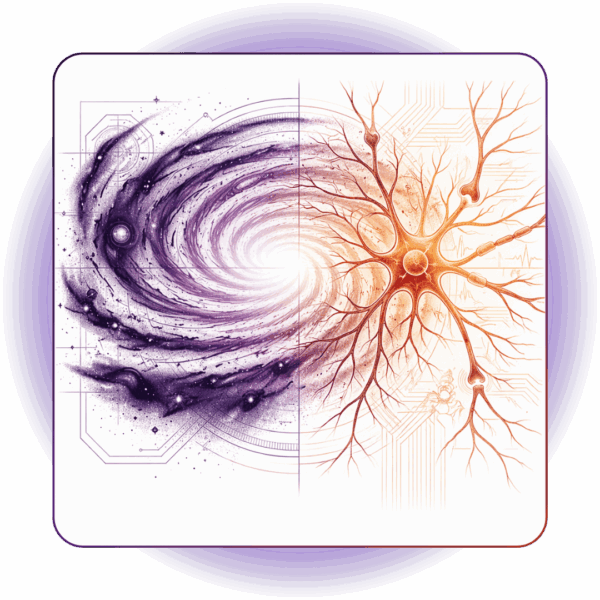
Unified physics is then presented as an alternative framework that describes reality as an interconnected structure spanning all physical scales. This approach emphasizes proportional relationships, coherence, and information flow as fundamental organizing principles. Within this model, black holes are examined as generative and organizing structures that operate across scales, from subatomic particles to cosmological systems.
Beyond its scientific scope, the course invites reflection on the broader philosophical and cultural consequences of scientific worldviews. It explores how explanatory gaps in modern physics contribute to a loss of meaning, coherence, and connection, and how a unified understanding of nature may offer a more holistic perspective on reality.
Through guided discussion and conceptual analysis, students are encouraged to critically assess prevailing scientific assumptions and engage with alternative ways of understanding matter, energy, and the structure of the universe. No advanced mathematics or prior training in physics is required.
This is a two-hour-per-week live session course for three months, with Prof. Ines Urdaneta. Classes are recorded. Courses available starting May 5, 2026.